
Invertebrate
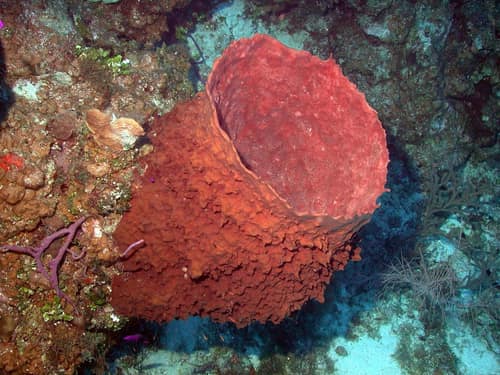
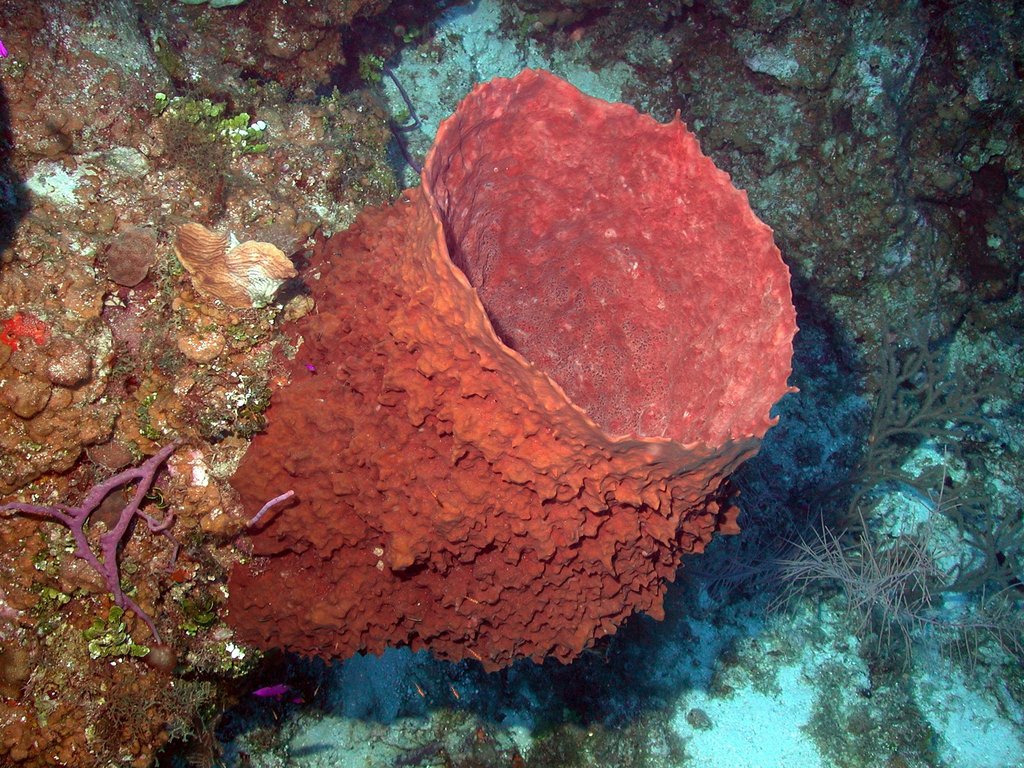
Giant Barrel Sponge
Xestospongia mutaAlso known as Caribbean Barrel Sponge
Known as the redwood of the reef, this colossal filter feeder can pump thousands of liters of seawater every day through its porous walls. Individuals often live for centuries or even millennia, growing slowly while providing critical three-dimensional shelter for hundreds of reef fish and invertebrate species. Cyclic bleaching events and fatal tissue-degrading conditions, such as sponge orange band disease, have become major concerns across warming Caribbean waters.
Reef-DwellerAncientFilter Feeder
—observations
—countries
—peak records
Not EvaluatedConservation statusIUCN Red List categoriesLCNTVUENCREWEXNot Evaluated — not placed on the risk ladderRed List categories, explained →
Diet & preyBacterioplankton, Phytoplankton, Dissolved organic matter
Predators
- Hawksbill Sea Turtle
- French Angelfish
- Gray Angelfish
ThreatsAnchor damage, diver collisions, marine heatwaves, and sponge diseases
HabitatsCoral reefs and rocky drop-offs at depths of 10 to 120 meters
Life span500 to over 2,000 years
Classification
- OrderHaplosclerida
- FamilyPetrosiidae
- GenusXestospongia
- SpeciesXestospongia muta
Range data is not available yet.
Interaction riskLow
- Low
- Moderate
- High
- Very high
- Why interaction risk is low
- Safe to observe at a normal distance.
- What to notice
- Recognizable as a massive, stony brown to purplish urn or barrel with deeply grooved outer ridges.
- Support conservation
- Maintain neutral buoyancy at least two meters away and never touch, sit on, or hold onto the rim.
Responsible observation
- Maintain Buoyancy: Keep fins and scuba gear well clear of the fragile, brittle rim.
- Look Inside: Shine a dive light down into the central cavity to spot resident cardinalfish and cleaner shrimp.
- Anchor Mindfully: Never drop boat anchors on deep coral reefs where large, ancient specimens grow.
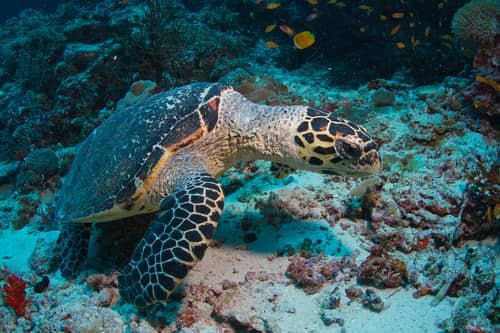
Predator "Hawksbill Turtle" by Tchami is licensed under CC BY-SA 2.0. To view a copy of this license, visit https://creativecommons.org/licenses/by-sa/2.0/. · cc-by-sa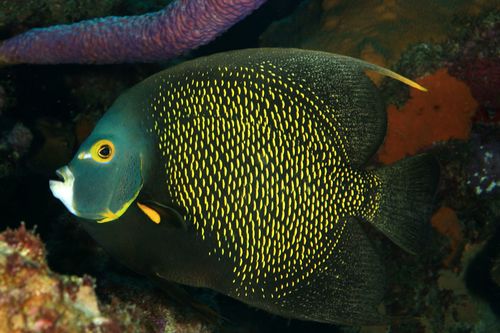
Predator (c) LASZLO ILYES, some rights reserved (CC BY) · cc-by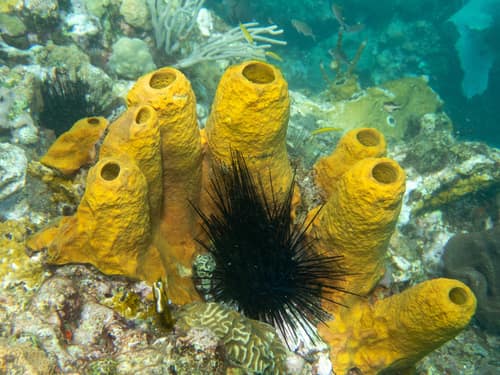
Frequent Companion (c) Don Loarie, some rights reserved (CC BY), uploaded by Don Loarie · cc-by Image unavailable
Close Relative
Keep collecting in Fauna
Found in Collections
Ecosystem chain Pro
Coral Currents
Giant Barrel Sponge is found in this collection. Identify it in Fauna to fill this slot and continue your progress.
Unlock to track progress
Help improve the field guideSomething wrong?
Checking your Fauna account…Report a name, category, or profile issue for review.