
Invertebrate
Atlantic Ghost Crab
Ocypode quadrataAlso known as Sand Crab, Ghost Crab
Atlantic ghost crabs race across sandy beaches at speeds up to 16 kilometers per hour, using four pairs of walking legs to change direction instantly. Pale, sand-colored carapaces allow these nocturnal scavengers to blend seamlessly into ocean dunes where they dig burrows up to a meter deep to reach damp sand. While adults breathe air through moist gills, females must periodically return to the ocean surf to release their eggs.
NocturnalCrustaceanBurrower
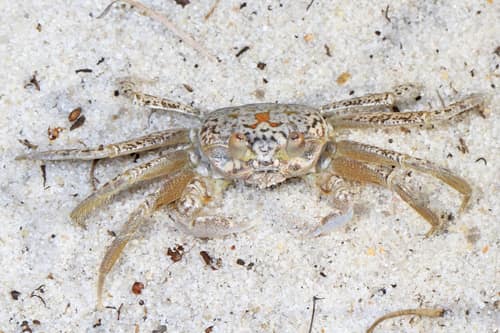
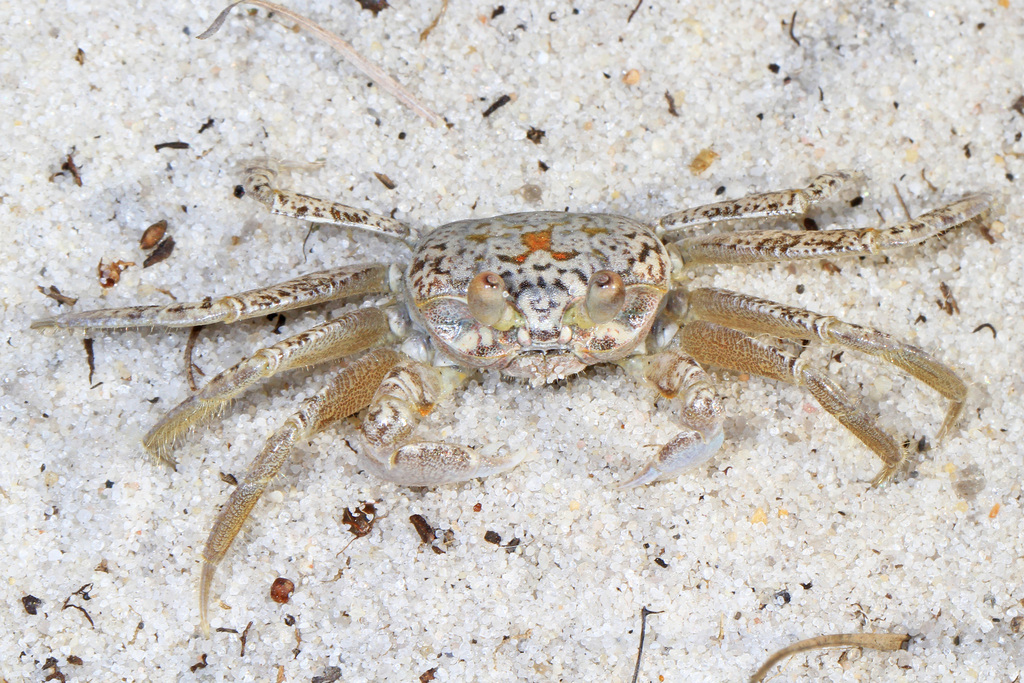
—observations
—countries
—peak records
Not EvaluatedConservation statusIUCN Red List categoriesLCNTVUENCREWEXNot Evaluated — not placed on the risk ladderRed List categories, explained →
Diet & preyCoquina Clams, Mole Crabs, Sea Turtle Hatchlings
Predators
- Gulls
- Raccoons
- Herons
ThreatsCoastal development, beach grooming, off-road vehicle traffic, and artificial light pollution
HabitatsSandy ocean beaches, coastal sand dunes, and intertidal shores
Life span3–5 years
Classification
- OrderDecapoda
- FamilyOcypodidae
- GenusOcypode
- SpeciesOcypode quadrata
Range data is not available yet.
Interaction riskLow
- Low
- Moderate
- High
- Very high
- Why interaction risk is low
- Powerful claws can deliver a painful pinch; observe quietly from a short distance.
Responsible observation
- Nighttime Observation: Use a red-filtered light after dark to watch foraging behavior without startling them.
- Dune Etiquette: Stay on designated paths to avoid crushing deep burrow entrances along the foredunes.
- Handling Precaution: Avoid picking them up, as their strong claws pinch tightly in self-defense.
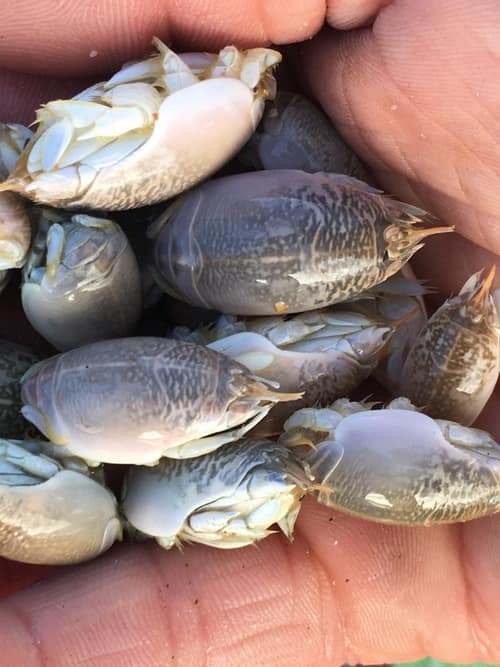
Prey (c) W. Terry Hunefeld, some rights reserved (CC BY), uploaded by W. Terry Hunefeld · cc-by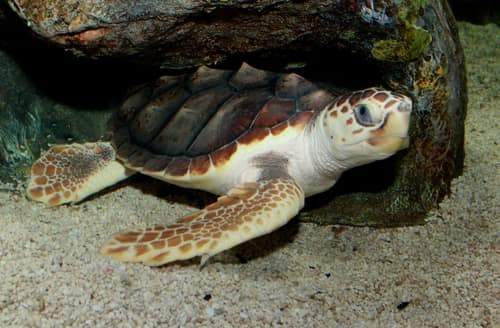
Food Source "Loggerhead Sea Turtle (Caretta caretta)" by brian.gratwicke is licensed under CC BY 2.0. To view a copy of this license, visit https://creativecommons.org/licenses/by/2.0/. · cc-by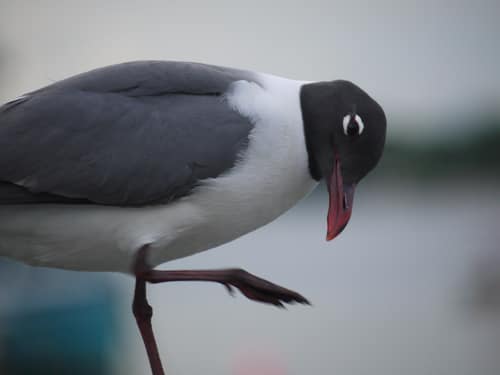
Predator "Laughing Gull" by grongar is licensed under CC BY 2.0. To view a copy of this license, visit https://creativecommons.org/licenses/by/2.0/. · cc-by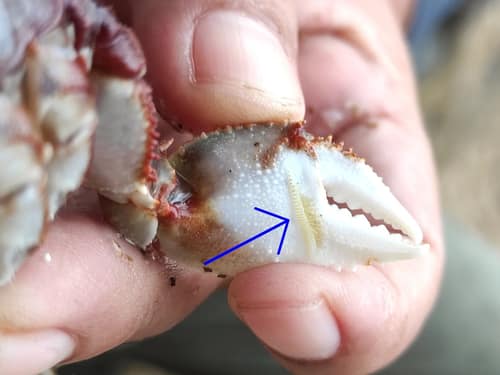
Close Relative (c) Abu Hamas, some rights reserved (CC BY-SA), uploaded by Abu Hamas · cc-by-sa
Keep collecting in Fauna
Found in Collections
Species set Pro
Shore Life
Atlantic Ghost Crab is found in this collection. Identify it in Fauna to fill this slot and continue your progress.
Unlock to track progress
Help improve the field guideSomething wrong?
Checking your Fauna account…Report a name, category, or profile issue for review.