
Insect
Valley Carpenter Bee
Xylocopa varipunctaAlso known as Teddy Bear Bee
Females are jet-black with iridescent wings, while males are covered in soft golden fur with bright green eyes. Female bees excavate nest tunnels into soft dry wood using their powerful jaws to rear offspring, whereas stingless males hover near trees searching for mates. They serve as vital pollinators for desert flora, agricultural crops, and suburban gardens across the American Southwest.
PollinatorDimorphicSolitary Bee
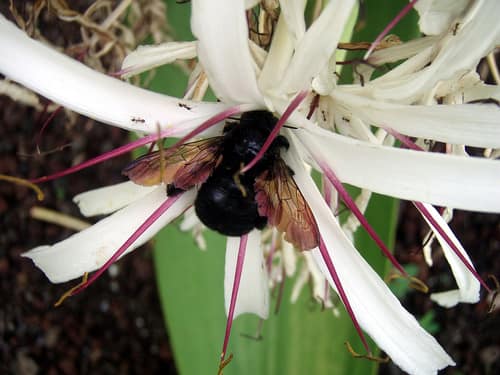
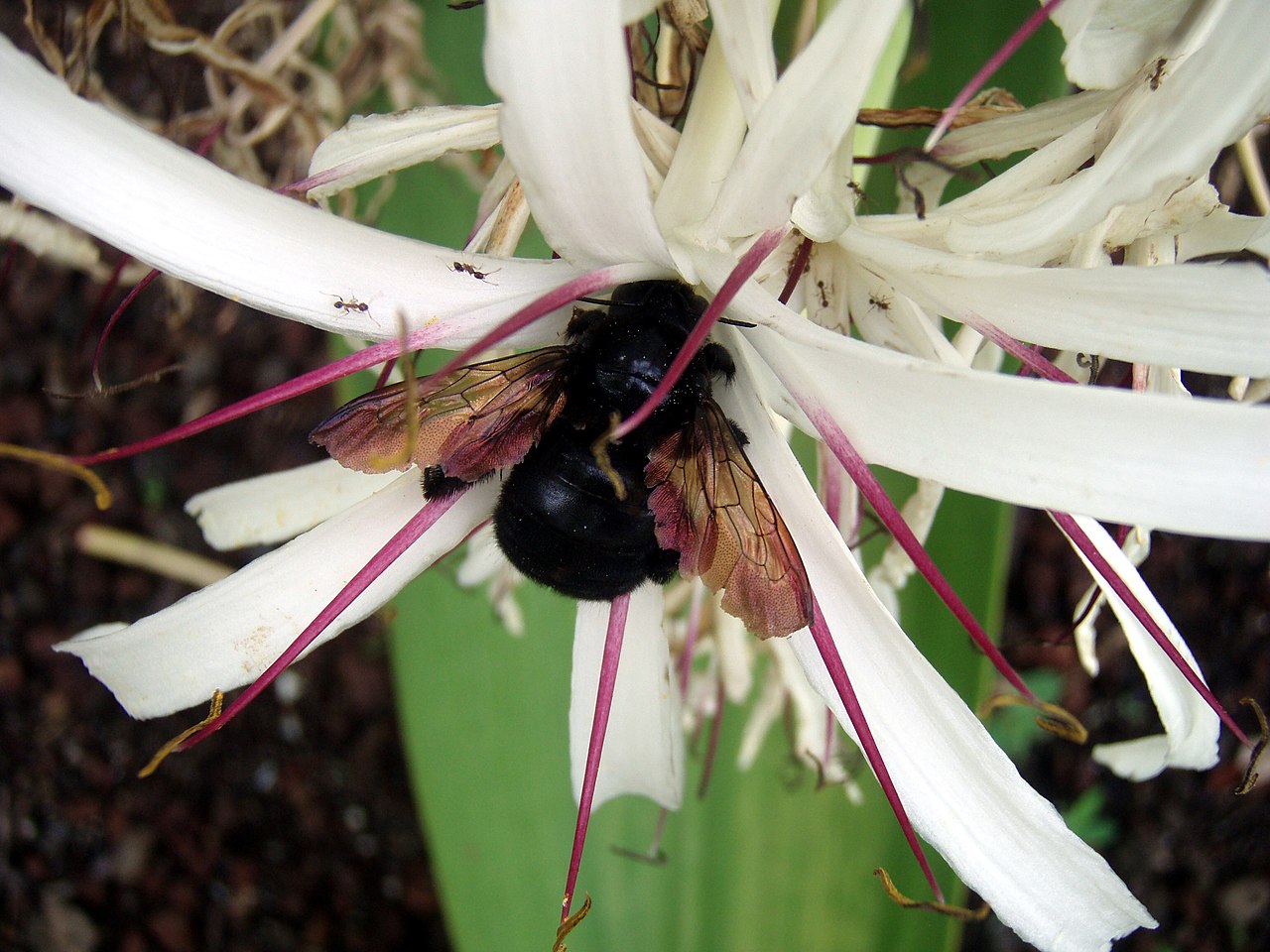
—observations
—countries
—peak records
Not EvaluatedConservation statusIUCN Red List categoriesLCNTVUENCREWEXNot Evaluated — not placed on the risk ladderRed List categories, explained →
Diet & preyNectar, Pollen
Predators
- Birds
- Lizards
- Praying Mantises
ThreatsHabitat loss, pesticide exposure, and destruction of nest wood
HabitatsDeserts, oak woodlands, suburban gardens, and riparian zones
Life span1–2 years
Classification
- FamilyApidae
- SpeciesXylocopa varipuncta
Range data is not available yet.
Interaction riskVery high
- Low
- Moderate
- High
- Very high
- Why interaction risk is very high
- Females can sting if handled or squeezed; observe foraging bees quietly from a short distance.
- Why it is dangerous
- Females possess a smooth sting capable of delivering venom, which can trigger severe allergic reactions in sensitive individuals.
- How to recognize a risky encounter
- Look for remarkably large bees: females are solid glossy black, while golden fuzzy males feature bright green eyes.
- What to do
- Give foraging bees space, never grab or squeeze them, and leave active wood nest entrance holes undisturbed.
Responsible observation
- Observe Males Hovering: Golden males establish sunny territories and are completely harmless because they lack stings.
- Avoid Nest Disturbance: Give active female nesting tunnels in dry timber or dead wood plenty of space.
- Plant Native Flora: Support local populations by planting native desert legumes, nightshades, and salvias.
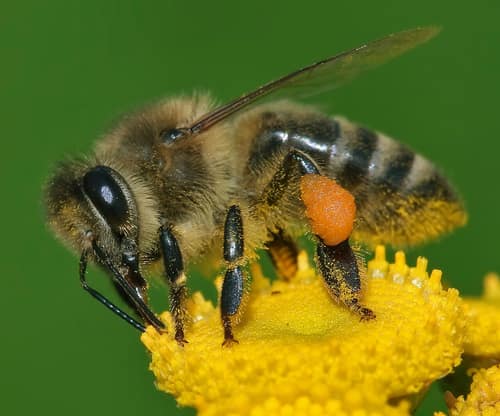
Competitor Andreas Trepte / CC BY-SA 2.5 · cc-by-sa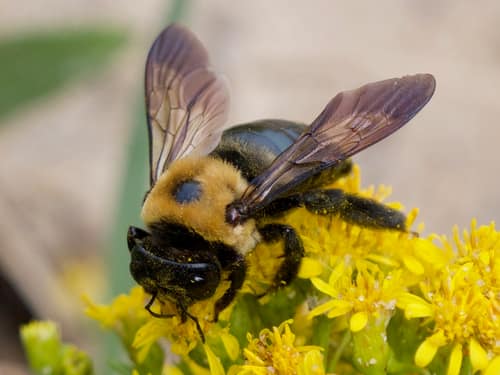
Close Relative (c) Christopher Eliot, some rights reserved (CC BY), uploaded by Christopher Eliot · cc-by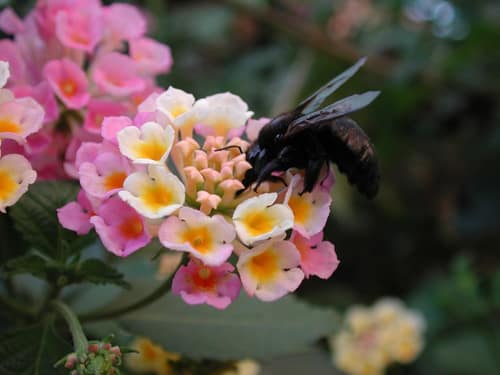
Close Relative Mike / CC BY-SA 3.0 · cc-by-sa
Help improve the field guideSomething wrong?
Checking your Fauna account…Report a name, category, or profile issue for review.