
Insect
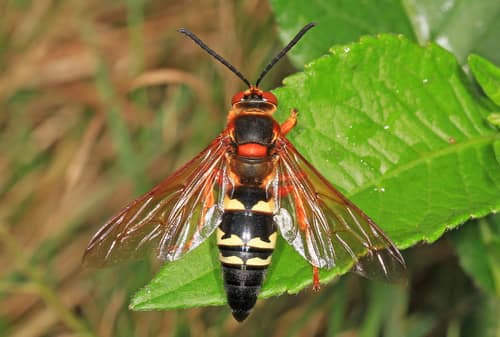
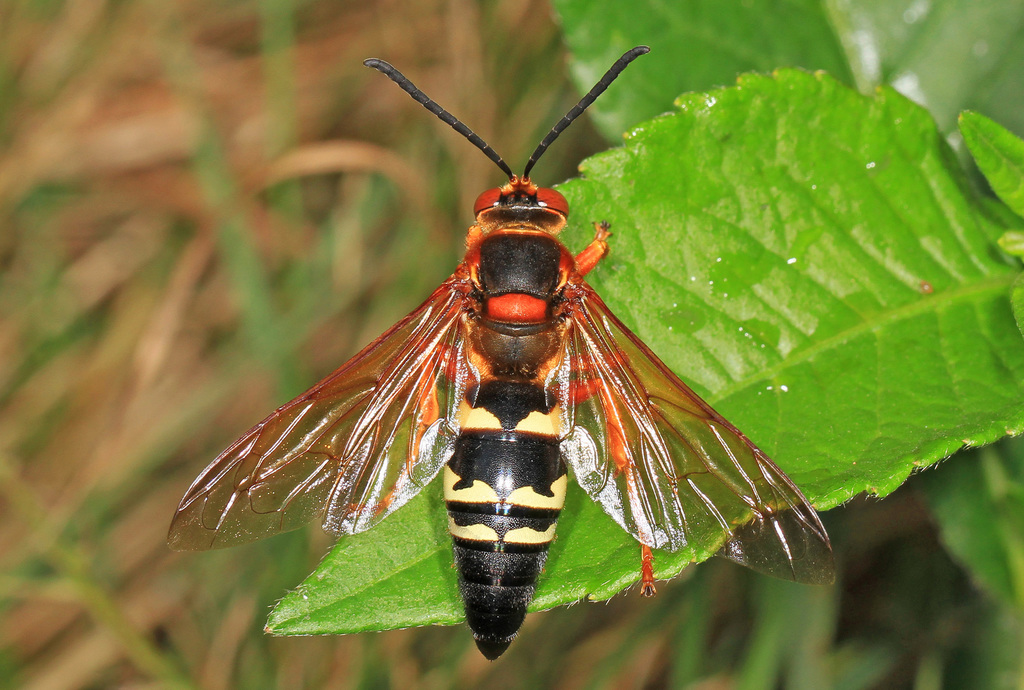
Eastern Cicada-killer Wasp
Sphecius speciosusAlso known as Cicada Killer, Sand Hornet
Eastern cicada-killer wasps are massive, solitary digger wasps renowned for their dramatic hunting behavior. Females hunt annual cicadas high in the tree canopy, paralyze them with a sting, and carry them back down to provision underground burrows. Despite their intimidating size, males lack stingers entirely and females rarely sting humans unless forcibly crushed or handled.
SolitaryLarge InsectBurrowing
—observations
—countries
—peak records
Not EvaluatedConservation statusIUCN Red List categoriesLCNTVUENCREWEXNot Evaluated — not placed on the risk ladderRed List categories, explained →
Diet & preyAnnual Cicadas, Flower Nectar, Tree Sap
Predators
- Birds
- Robber Flies
- Armadillos
ThreatsPesticide application, direct persecution by landowners, habitat compaction
HabitatsLawns, flower beds, sandy banks, forest edges, pastures
Life span1–2 months as adults; up to 1 year including overwintering larval stage
Classification
- OrderHymenoptera
- FamilyCrabronidae
- GenusSphecius
- SpeciesSphecius speciosus
Range data is not available yet.
Interaction riskVery high
- Low
- Moderate
- High
- Very high
- Why interaction risk is very high
- Females can sting if handled or stepped on, but males cannot sting; observe nest clusters calmly from a short distance.
- Why it is dangerous
- Injects mild venom designed to paralyze insects, which causes local pain and swelling or potential allergic reactions in sensitive individuals.
- How to recognize a risky encounter
- Distinguished by its huge size, yellow-striped black abdomen, reddish wings, and rusty orange legs.
- What to do
- Maintain a respectful distance near nest mounds; avoid bare feet on infested sandy lawns.
Responsible observation
- Male Buzzing: Male wasps frequently buzz near intruders to defend territory, but they lack stingers and are harmless.
- Lawn Care: Avoid stepping barefoot on sandy nest patches during peak summer activity.
- Ecological Value: Keep nests intact to help control sap-draining cicada populations in suburban trees.
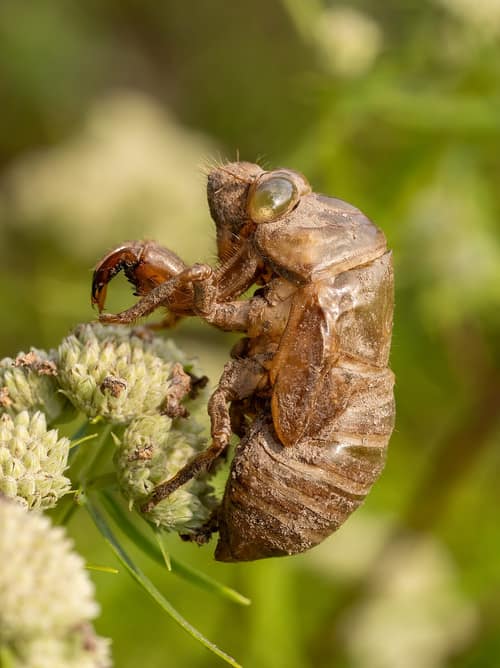
Primary Prey Rhododendrites / CC BY-SA 4.0 · cc-by-sa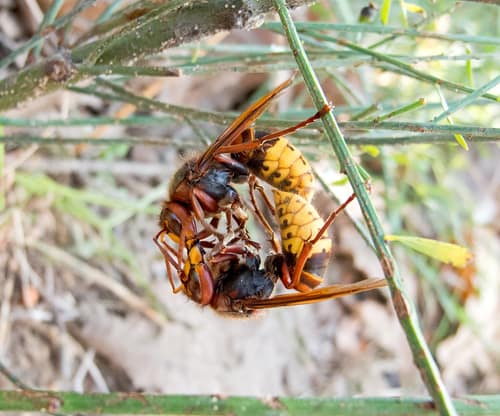
Look-alike (c) katunchik, some rights reserved (CC BY), uploaded by katunchik · cc-by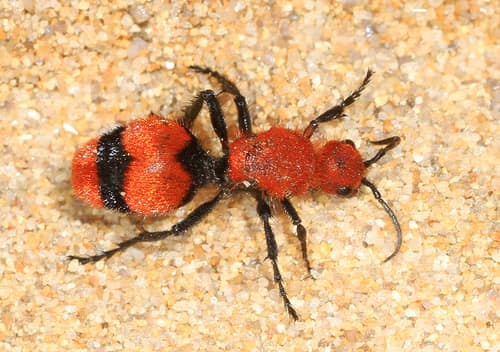
Parasitoid (c) Judy Gallagher, some rights reserved (CC BY-SA), uploaded by Judy Gallagher · cc-by-sa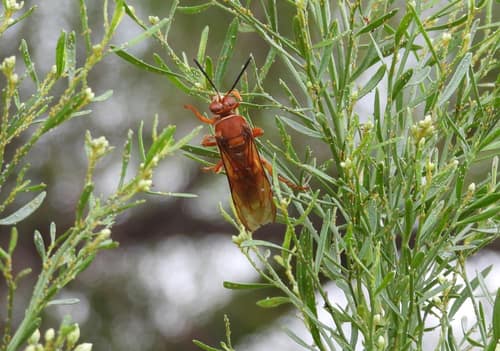
Close Relative (c) Bob Nieman, some rights reserved (CC BY) · cc-by
Help improve the field guideSomething wrong?
Checking your Fauna account…Report a name, category, or profile issue for review.