
Insect
Goliath Beetle
Goliathus goliatusAlso known as African Goliath Beetle
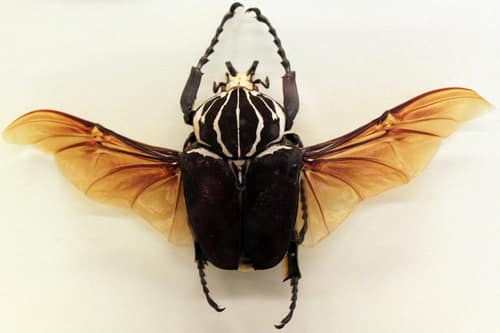
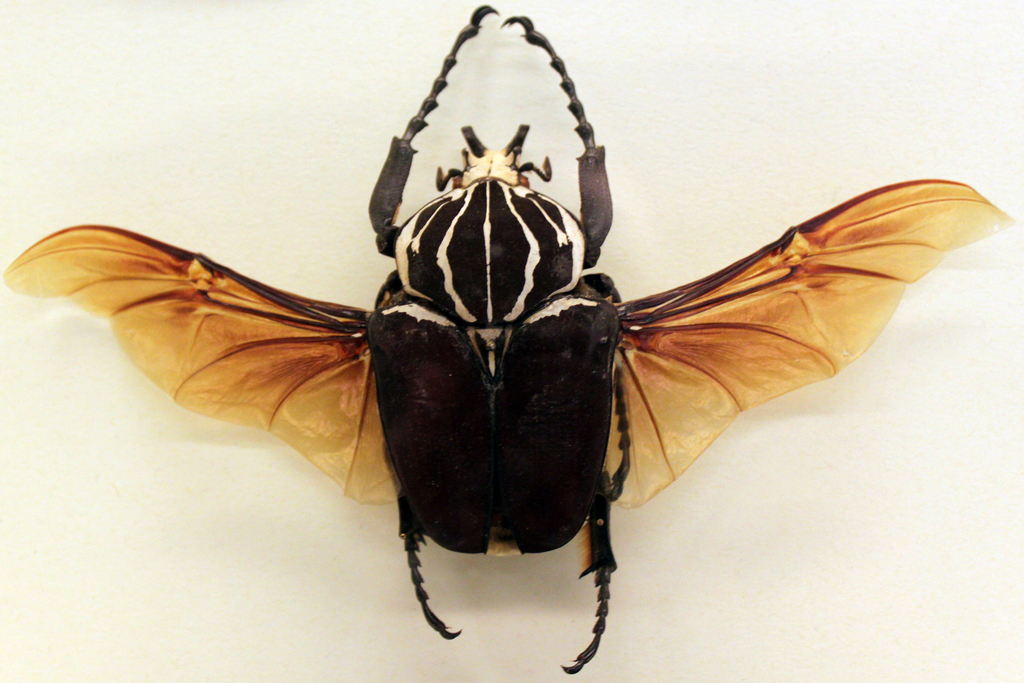
Goliath beetles spend most of their adult lives high in equatorial rainforest canopies, where they feed hungrily on fermenting tree sap and decaying fruits. Males possess prominent, Y-shaped head horns used as jousting levers to dislodge rivals from prime feeding and mating perches on tree trunks. Despite their massive bulk, adults take flight with a resonant, low-pitched buzz that echoes through the canopy under full tropical sunlight.
DiurnalCanopy DwellerHeavyweight
—observations
—countries
—peak records
Not EvaluatedConservation statusIUCN Red List categoriesLCNTVUENCREWEXNot Evaluated — not placed on the risk ladderRed List categories, explained →
Diet & preyTree sap, Decaying fruit, Flower pollen
Predators
- Crowned Eagle
- Chimpanzee
- Large hornbills
ThreatsRainforest deforestation, habitat fragmentation, and commercial overcollection for specimen trading
HabitatsEquatorial rainforests, secondary tropical forests, and riverine woodlands
Life span6–12 months as an adult (up to 2 years including larval stage)
Classification
- FamilyScarabaeidae
- SpeciesGoliathus goliatus
Range data is not available yet.
Interaction riskLow
- Low
- Moderate
- High
- Very high
- Why interaction risk is low
- Safe to observe at a normal distance.
Responsible observation
- Listen carefully: Listen for a loud, drone-like buzzing overhead when adults take flight in sunny canopy gaps.
- Look near sap: Scan high tree wounds where dripping sap naturally gathers competing scarabs.
- Handle gently: If an adult lands on you, avoid pulling; its sharp tarsi cling tenaciously to fabric.
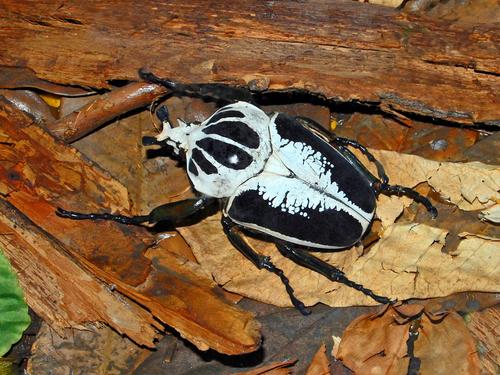
Close Relative (c) Hectonichus, some rights reserved (CC BY-SA) · cc-by-sa Image unavailable
Close Relative Same Subfamily 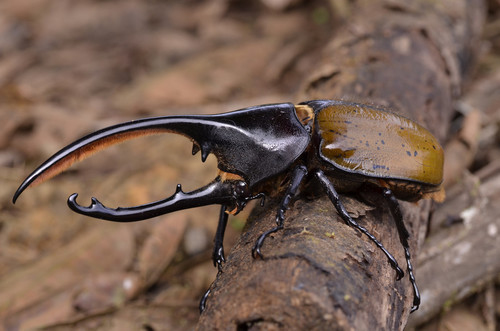
Same Family (c) TOUROULT Julien, some rights reserved (CC BY), uploaded by TOUROULT Julien · cc-by
Help improve the field guideSomething wrong?
Checking your Fauna account…Report a name, category, or profile issue for review.