
← Identification guidesSide-by-side field guide
Bumble bee or eastern carpenter bee?
Compare a furry abdomen with a shiny black one, then compare their nests.
Last updated
VS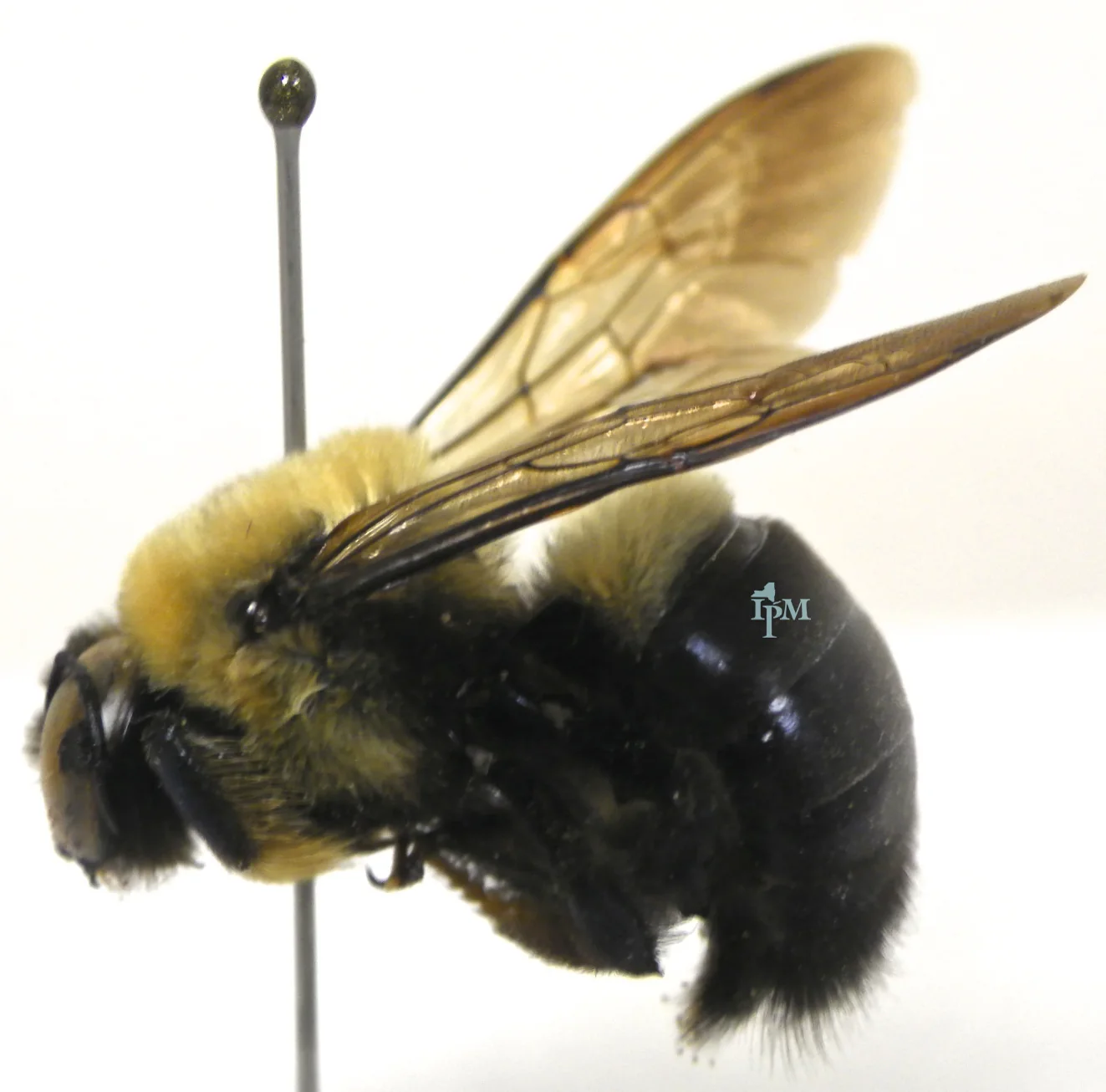
Photo: Carpenter Bee - Xylocopa virginica by New York State IPM Program at Cornell University · CC BY 2.0 · Resized and converted to WebP; displayed with a crop.
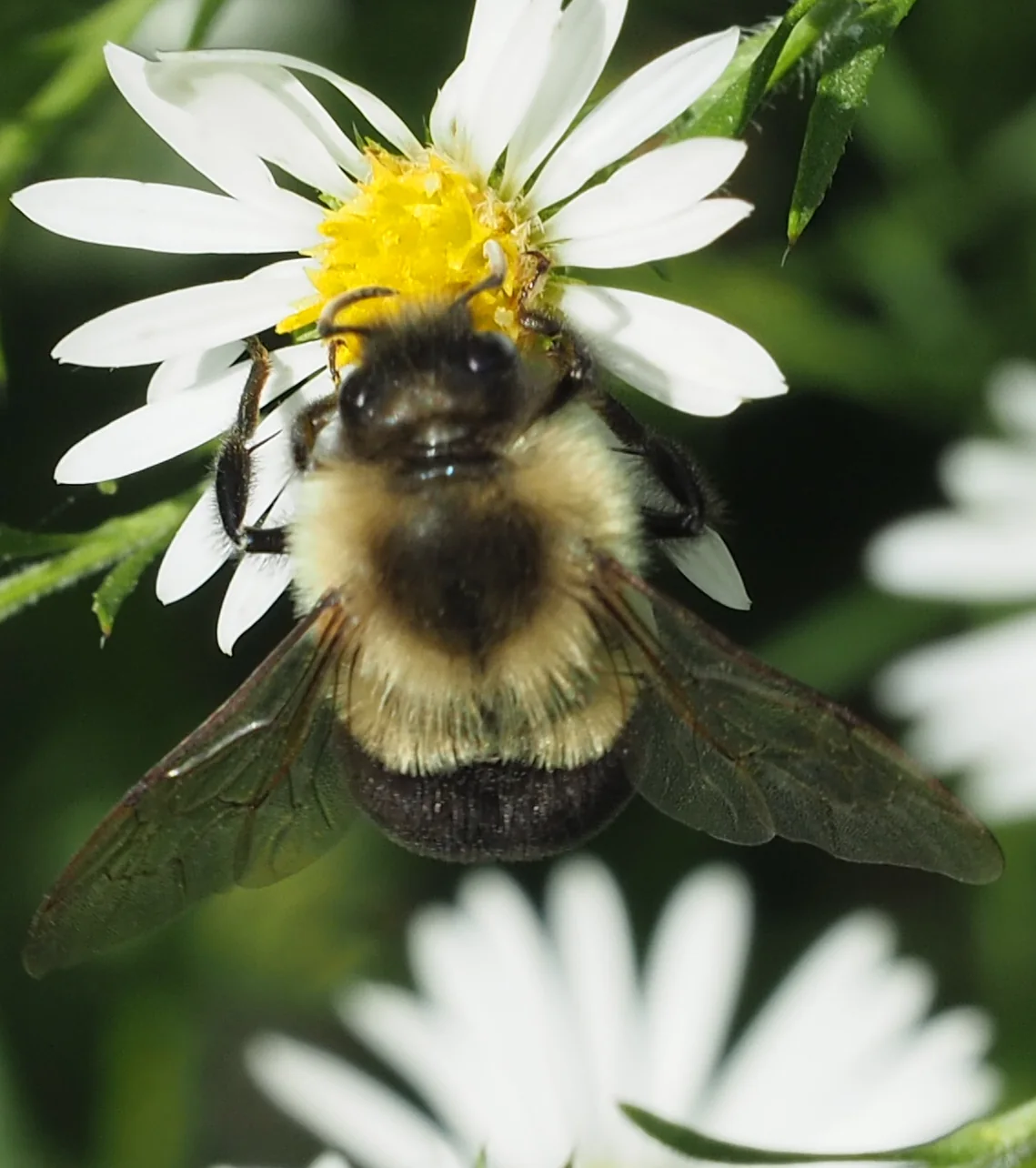
Eastern Carpenter Bee
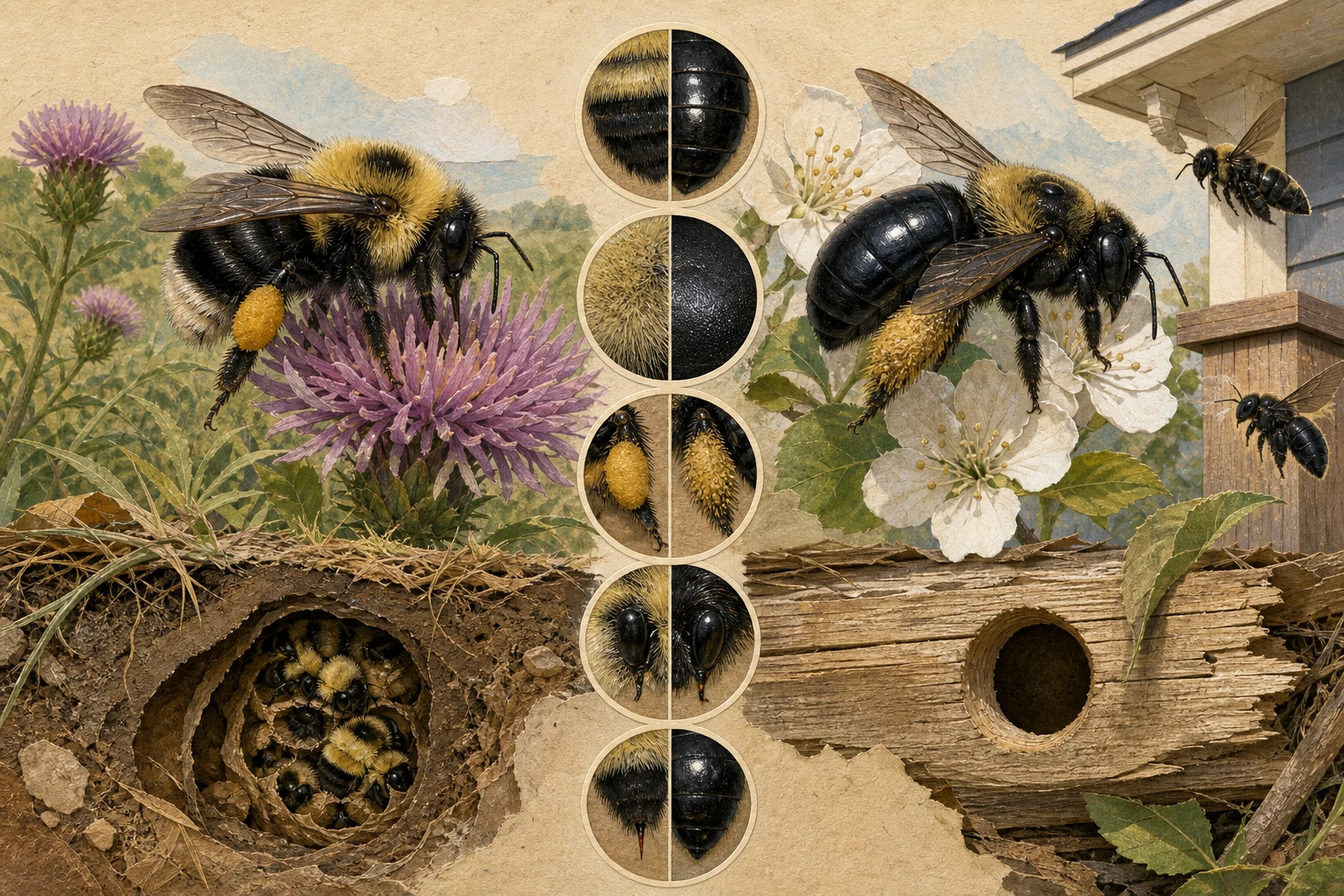
Abdomen [1][2][3][4]
Densely hairy, with pattern and color varying by species
Upper abdomen largely bare, black, and glossy
Nest [1][2][3][4]
Social colony, often in an old underground burrow or cavity
Females excavate or reuse round entrances in bare wood; nests are not eusocial colonies
Behavior [1][2][3][4]
Works flowers steadily; many species buzz-pollinate by vibrating
Males often hover conspicuously near eaves and railings
Sting [1][2][3][4]
Females can sting; usually defensive near the nest
Hovering males cannot sting; females can but seldom do
Pollen load [5][6]
Foraging females pack pollen into a bare, concave basket on the hind leg
Females carry pollen in a dense brush of hind-leg hairs, not a basket
Still not sure?
Download on the App StoreGet Fauna and identify it in the field.
Source-checked editorial guide. Last updated .
- Mississippi State University Extension — What's the Difference in Carpenter Bees and Bumble Bees? ↗
- Penn State Extension — Carpenter Bees ↗
- University of Maryland Extension — Carpenter Bees ↗
- Xerces Society — Bumble Bee Information ↗
- Xerces Society — About Bumble Bees ↗
- University of Arkansas Arthropod Museum — Carpenter Bee ↗
- Xerces Society — Bumble Bee Nesting and Overwintering ↗
- University of Kentucky Entomology — Carpenter Bees (ENTFACT-611) ↗